
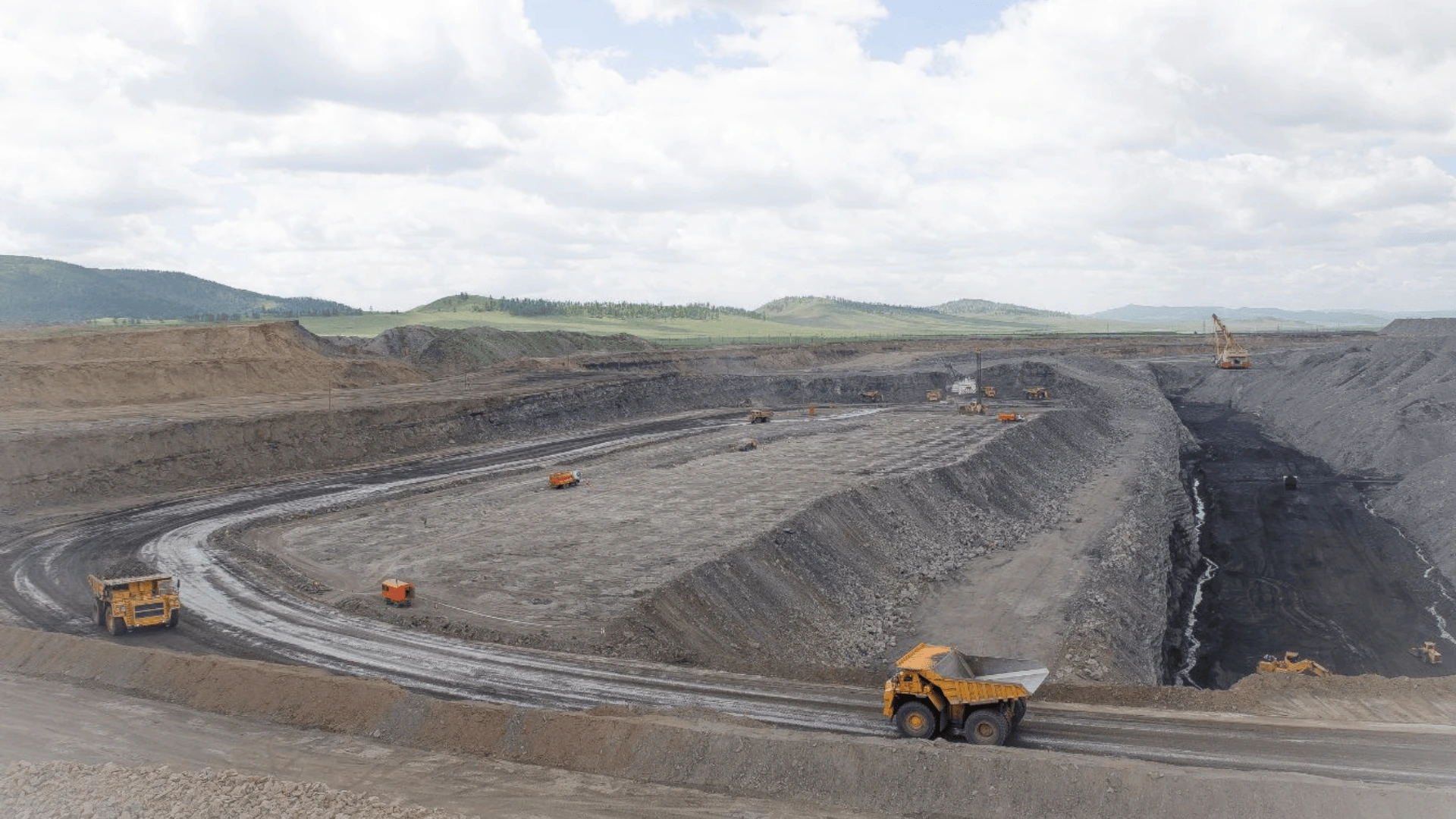
Tugnuisky Mine: the scale of Connectum projects
Tugnuisky Mine is currently one of the largest projects in our industrial portfolio. More than 150 vehicles and machines operate here, and the distance between the mining areas alone is 7 km.
Customer profile
The deposit is located in the Petrovsk-Zabaikalsky District of Zabaykalsky Krai, 90 km southeast of Ulan-Ude.
Coal production: 14 million metric tons/year
Total area: 17.5 km²
23 world productivity records
What we delivered
We designed and built a Wi‑Fi-based operational network and continue to maintain it for the automated dispatch and fleet management system (ASUD) serving mining haulage and auxiliary equipment.
Phased network expansion
The network initially connected 40 mobile terminals and was later expanded to 150 terminals.
Technical solution
13 ABB Tropos 6420 base stations with Mesh technology (coverage across the entire site without dead zones and automatic network reconfiguration)
150 ABB Tropos 4310-XA mobile terminals with HUBER+SUHNER antennas on mobile equipment (reliable connectivity even while vehicles are moving)
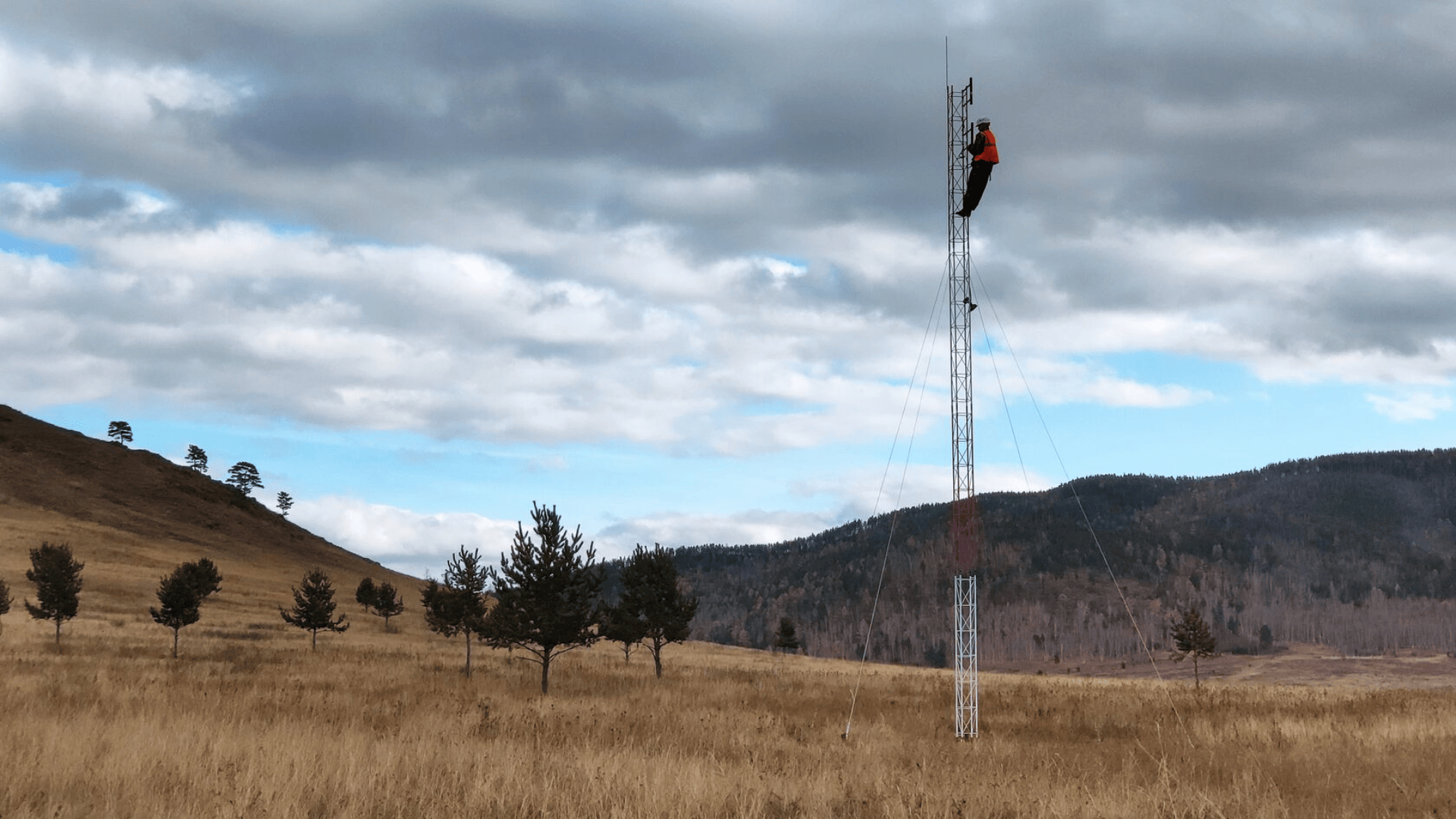
Lightweight masts 12-24 meters high, allowing optimal equipment placement and clear lines of sight.
Mast-mounted solar power systems for independent power supply
Project challenges
Challenge #1 was to provide reliable coverage across the open-pit mine. Its terrain (elevation changes, excavations and embankments), combined with the need to connect mobile equipment, requires careful design. A further challenge is that long-term wireless infrastructure planning is not possible because the mine’s layout and working areas constantly change. Base station locations change every year.
Challenge #2 was to find opportunities to stop mobile equipment (haul trucks, loaders and excavators) or access it during maintenance to install mobile terminals. Installation was completed within the 30-60 minutes available while equipment was undergoing maintenance or stopped for other reasons.
Challenge #3 was the inability to run power lines to the locations best suited to base stations from an RF perspective. Some base stations therefore had to be moved to locations with an available power supply, while others were powered by independent solar power systems.
Challenge #4 was additional infrastructure. We installed 15 masts of different heights, ranging from 12-24 meters, along the haul road and mounted base stations and solar panels on them. Each mast consists of three-meter sections with guy wires anchored to the ground using screw piles. Buryatia’s dry gravel soil required specialist drilling equipment. One 24-meter mast was installed in 1 working day, with 2 installers typically involved.
Results
Everything is operational. More specifically, the Wi‑Fi-based operational network provides:
1. Full coverage and straightforward network scaling as the mine’s layout changes: the network consists of distributed access points whose locations and transmit power can be adjusted to maintain a stable signal and full coverage. The company controls the network and equipment, eliminating dependence on an LTE operator.
2. Reliable and fast data transmission from the onboard mining fleet management units to the system’s central server. This enables prompt process monitoring and informed decisions in real time.
3. Remote equipment condition monitoring and management reduces downtime and improves efficiency.
4. Processing and analysis of large volumes of data to optimize production processes and improve the facility’s overall operational efficiency.
5. Integration of IIoT devices and sensors to collect environmental, production process and safety data.
6. Prompt communication with employees.
7. Independent operation and lower costs: deploying a network at sites without wired infrastructure, using solar power systems to power the equipment and reducing subscription costs.
8. Security and access control: live video and event recording, employee activity monitoring, detection of suspicious activity, and integration with cards and biometrics.
What comes next
Every open-pit mine expands and changes its boundaries. Its infrastructure must expand accordingly, adding mobile units and base stations. Wi‑Fi-based operational connectivity makes this possible quickly, cost-effectively and independently.
Autonomous equipment is one of the next steps in the mine’s digital transformation. The company has already introduced it at another site (Izykhsky Mine, where Connectum also provides wireless connectivity).