
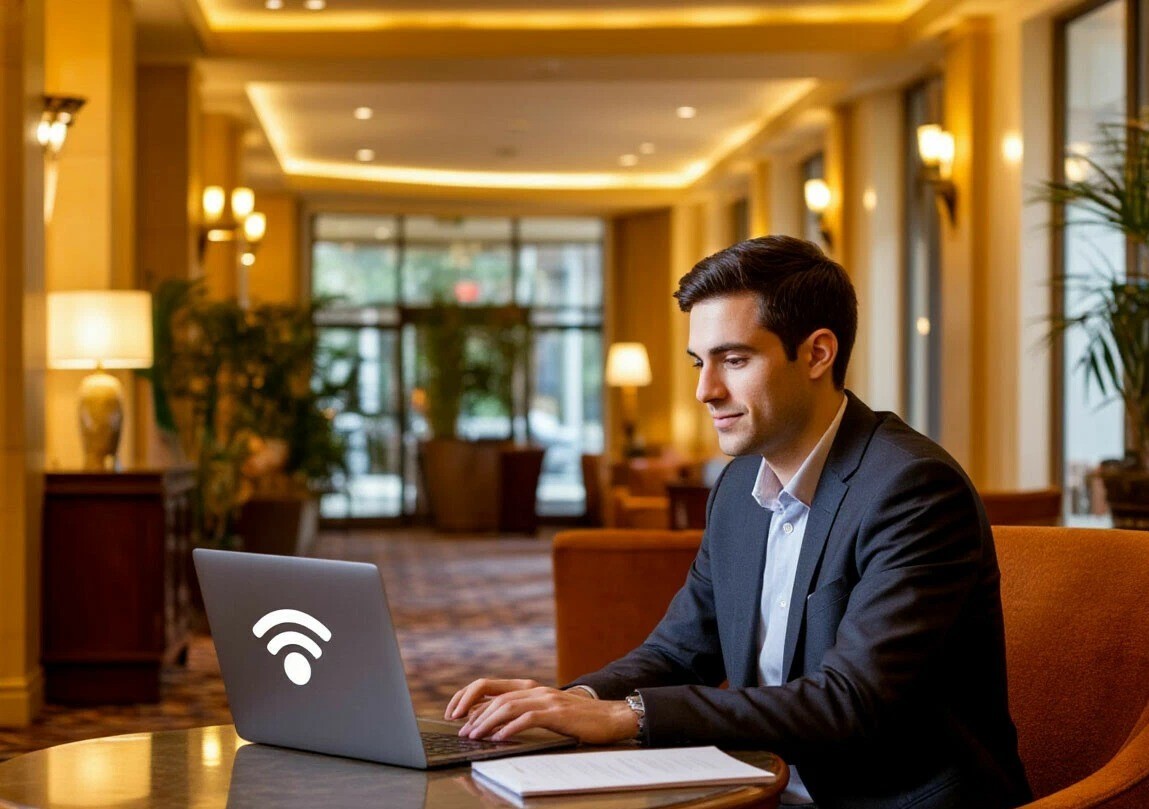
In 2026, guest Wi‑Fi can support sales 24/7 as well as provide connectivity.
This article looks at how identification requirements under Federal Law No. 152-FZ can form part of a revenue-generating service.
Guest Wi‑Fi as a customer data touchpoint
Every connection creates information. The opportunity is to use it meaningfully.
A shared username and password reveal little about the visitor, their origin, visit frequency, or interests.
An authentication platform can use:
- Room number (for hotels)
- Social network (VK, Telegram)
- Email or an SMS verification code
This creates an identified user profile alongside internet access.
How it works in practice: three monetization scenarios
Scenario 1. Hotel: personal offers directly to the room
A guest checks in and signs in using a room number. The system recognizes Ivan, traveling with family, who last visited two years ago.
Fifteen minutes after check-in, Ivan receives an offer through Wi‑Fi or a messenger: a complimentary poolside cocktail for the family, a spa discount, or water park tickets.
The guest receives a relevant offer, and the hotel sells services that might otherwise go unused. According to our Accor hotel customers, personalized portal offers increase ancillary service revenue by 15–20%.
Scenario 2. Restaurant or shopping center: repeated visits via Wi‑Fi
A restaurant visitor signs in through VK, allowing the system to recognize a returning guest.
A week later, a message offers Ivan a complimentary second pasta dish with a favorite drink on Thursday.
A personal, relevant invitation encourages another visit more effectively than a generic mass message.
Scenario 3. Collecting analytics for marketing
The authorization system accumulates data. You begin to understand:
- What time of day do you have the highest traffic?
- Where do the guests come from (by city codes)?
- How often does the same person come back?
These insights help marketers segment audiences and target offers more accurately.
The requirements of the law are not a barrier, but a base
Yes, since 2018, Russia has a law requiring the identification of users of public networks. Many still perceive this as a headache.
SMS, call, or Gosuslugi (Russia’s public services portal) authentication creates a guest touchpoint. A quick, clear process can collect contact information for future sales without frustrating visitors.
Connectum authentication takes 10–15 seconds, providing a short identification process for guests.
What should be under the hood
Monetization needs reliable underlying infrastructure:
- Consistent coverage. Even well-designed marketing fails if guests cannot connect in their rooms or at the far end of a venue.
- Roaming. Guests moving from the lobby to a restaurant or between floors should remain connected.
- PMS/CRM integration. Room-number authentication identifies the guest and sends relevant activity data to a shared database.
- Flexible marketing tools. Configure messages, welcome screens, and seasonal promotions.
Case: How a 400-room hotel increased sales of spa services
A Crimean hotel chain implemented PMS-integrated authentication. Guests enter their room number, receive a personalized greeting, and see a weekly weather forecast.
One month after launch, the hotel added a portal banner promoting spa treatments during quiet hours, from 2 p.m. to 5 p.m., without additional advertising expenditure.
Off-peak spa occupancy rose by 30%, generating additional revenue from existing guests.
What is the outcome?
Guest Wi‑Fi has ceased to be a technical option. Today it is:
- Customer Data Collection Channel
- Personalized marketing tool
- Point of sale without additional budget
- A way to increase loyalty and NPS
Connectum designs wireless networks that support business objectives through coverage, convenient authentication, and system integration.
Do you want to try it on your site?
We visit the site, conduct a Wi‑Fi survey, and show how the existing network can become a marketing asset for a hotel, restaurant, or shopping center.
Connectum builds connectivity that supports revenue.
In practice: Safmar Palace Moscow
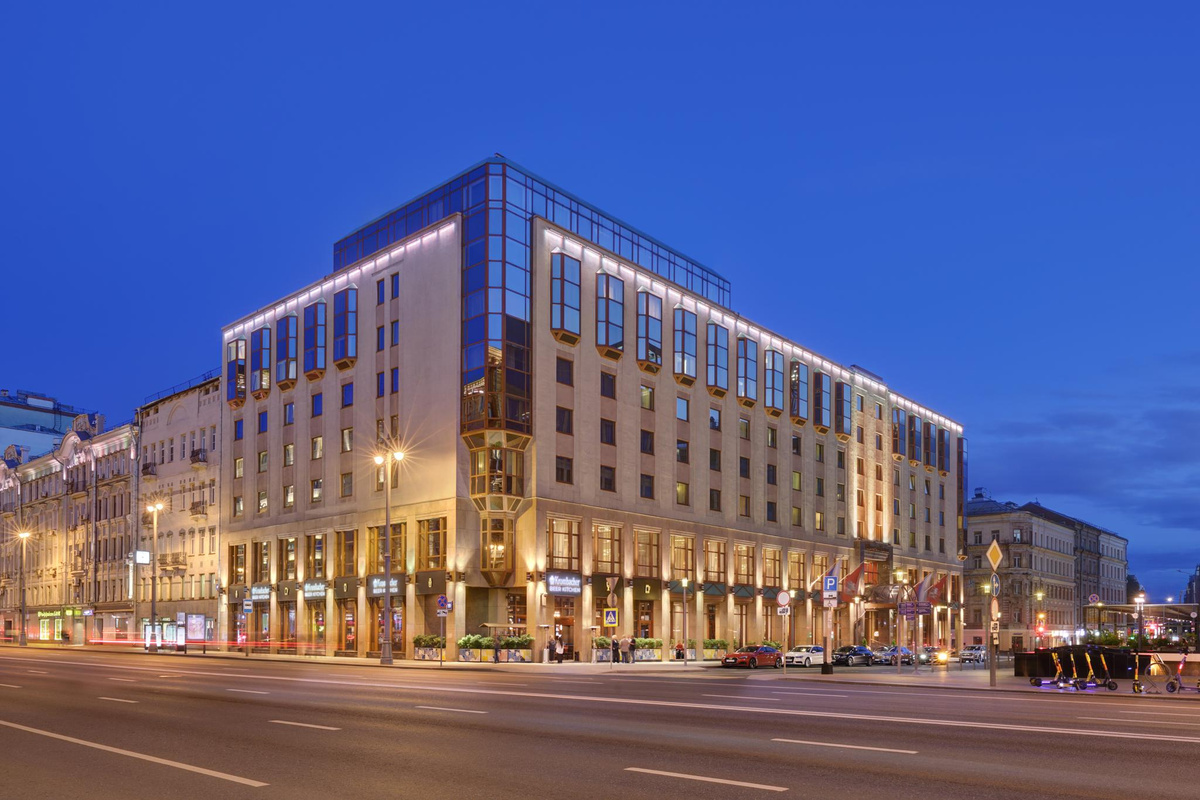
Safmar Palace Moscow 5*, formerly Sheraton
At Safmar Palace Moscow 5*, formerly Sheraton, Connectum designed and deployed Wi‑Fi using enterprise Cisco and Aruba equipment based on IEEE 802.11ac. Guests authenticate by room number, while public areas use SMS. Basic-speed access is included in accommodation; higher-speed premium access is available for a fee.
Safmar offers higher speeds to loyalty members and communicates the benefit through the portal. At another Connectum project, DoubleTree by Hilton Moscow Marina 4*, guests receive brief hotel information through WhatsApp.
The portal can also request feedback after the first day, timed thoughtfully for the following morning or the guest’s evening return.
We hope this article will help you take a fresh look at the potential of guest Wi‑Fi in your hotel and encourage you to discuss your requirements with a Connectum project engineer.
We will perform engineering diagnostics and conduct a preliminary Wi‑Fi site survey to offer the best solution for your business.